
Elbow Pain Conditions, Assessment and Treatment
Joint Injection Clinic provides private elbow pain assessment and treatment at clinics in Dartford, Kings Hill, Canterbury and Romford. No GP referral is required, and appointments are usually available within 24–48 hours.
Elbow pain may originate from the tendons, joint, bursa, nerves or surrounding soft tissues. Because different elbow conditions can produce similar symptoms, treatment begins with a clinical assessment to identify the likely cause.
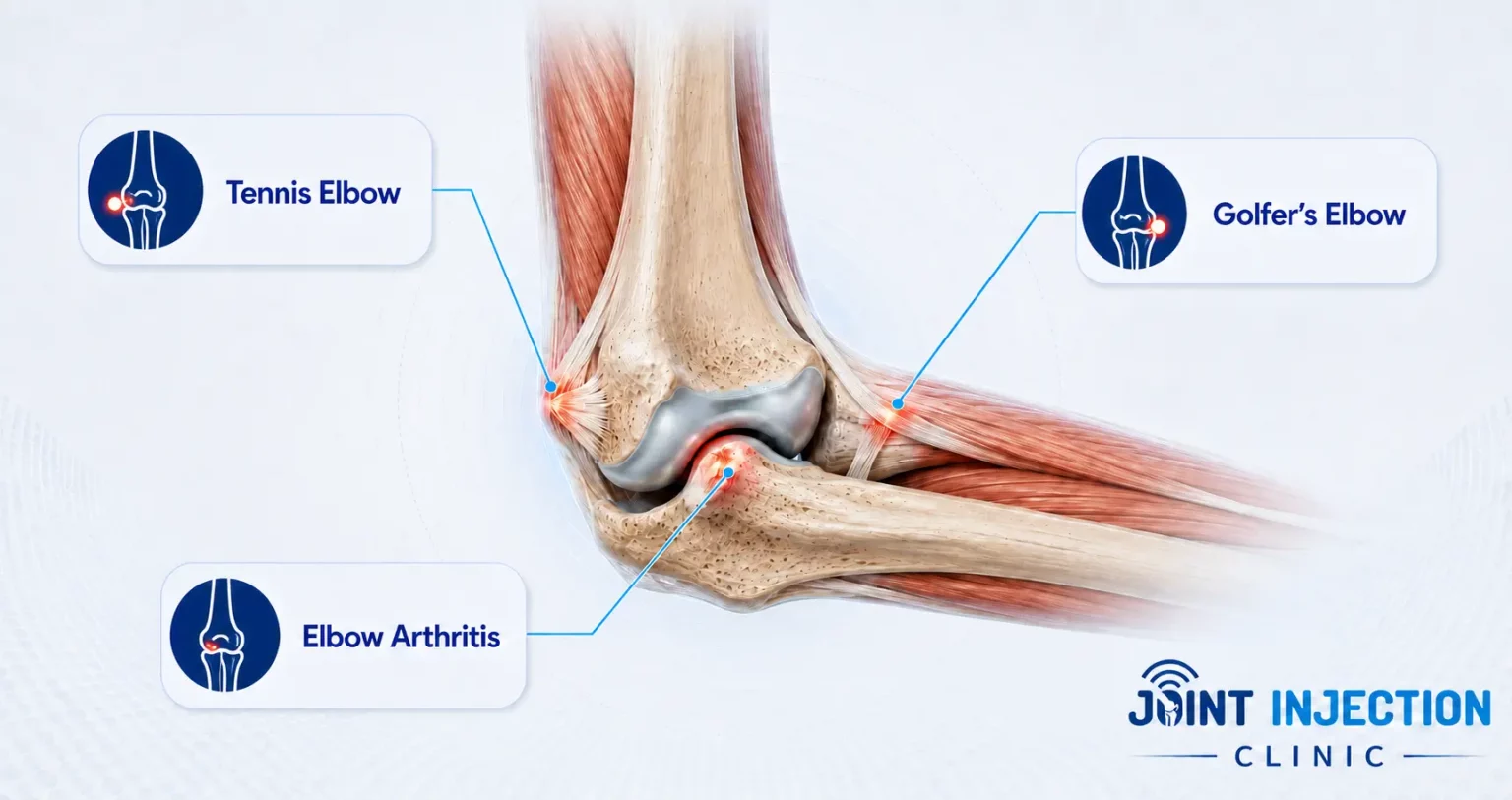
Common Elbow Pain Conditions
Explore the conditions below to learn about their symptoms, possible causes and treatment options.



Elbow Pain Treatment Near You
Elbow pain is not always caused by the same structure, which is why treatment at JIC begins with an individual assessment rather than a predetermined procedure.
Once we understand what is contributing to your symptoms, treatment may include physiotherapy and progressive exercises to improve movement, forearm strength and tolerance to gripping or lifting. Advice on activity modification and managing the loads placed on the elbow may also form an important part of recovery.
Shockwave therapy may be considered for selected cases of persistent tennis elbow or golfer’s elbow. Diagnostic MSK ultrasound may be helpful when symptoms are unusual, a tendon tear or another diagnosis is suspected, or recovery is not progressing as expected.
For selected cases of elbow arthritis or post-traumatic joint pain, an ultrasound-guided corticosteroid injection may be considered for temporary symptom relief.
Not every treatment is appropriate for every patient. Your clinician will explain the available options, expected benefits and relevant risks following assessment.