
Knee and Lower Leg Pain Conditions, Assessment and Treatment
Joint Injection Clinic provides private assessment and treatment for knee and lower-leg pain at clinics in Dartford, Kings Hill, Canterbury and Romford. No GP referral is required, and appointments are usually available within 24–48 hours.
Knee and lower-leg symptoms may originate from the joint cartilage, menisci, ligaments, tendons, fat pads, cysts or calf muscles. Because pain, swelling, stiffness and instability can have different causes, treatment begins with an individual clinical assessment rather than a predetermined procedure.
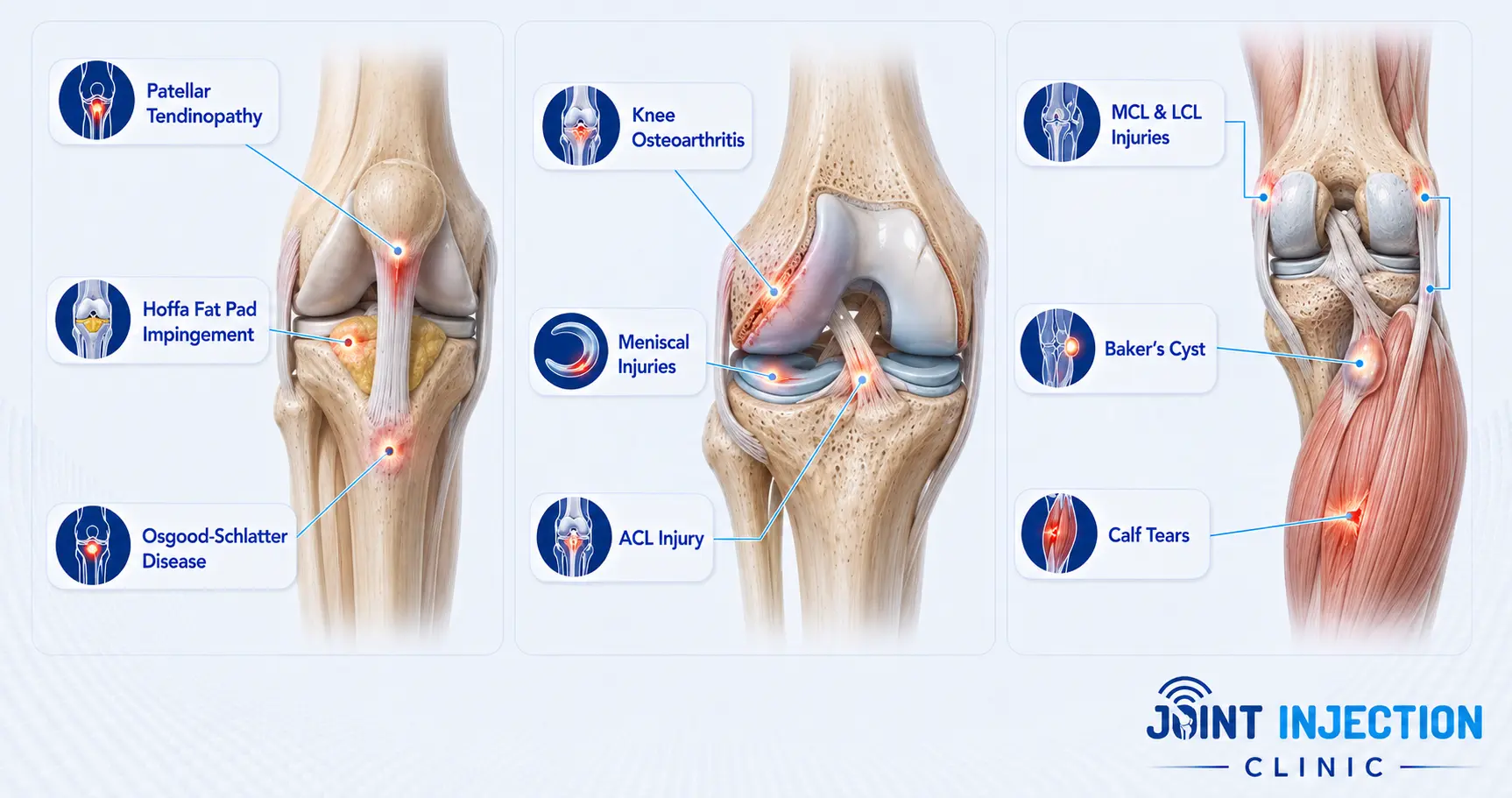
Common Knee and Lower Leg Pain Conditions
Explore the conditions below to learn about their symptoms, possible causes and available treatment options.








Knee and Lower Leg Pain Treatment Near You
Knee pain does not always originate from the same structure. Your assessment may therefore include a review of how the symptoms began, examination of knee movement and stability, and evaluation of strength, walking and other relevant activities.
Depending on the diagnosis, treatment may include activity and load-management advice, MSK physiotherapy and progressive rehabilitation to restore movement, strength, stability and confidence.
Diagnostic MSK ultrasound may help assess structures such as the patellar tendon, Baker’s cyst, calf muscles and other accessible soft tissues. Shockwave therapy may be considered for selected cases of persistent patellar tendinopathy.
For selected cases of knee osteoarthritis, an ultrasound-guided corticosteroid or Ostenil Plus injection may be discussed.
A symptomatic Baker’s cyst may sometimes be treated with ultrasound-guided aspiration or corticosteroid treatment. Because a Baker’s cyst is often associated with another knee problem, the possible underlying cause should be considered before drainage.