
What Should I Do After a Cortisone Injection? Aftercare of cortisone Injection.
Reviewed By:
Dr. Sameer Gohir PhD, MSc, PG Cert MSK ultrasound, PG Cert. Non-Medical Prescribing, MCSP, MAPPN
Muhammad Asim Ishaque MSc, PG Cert MSK ultrasound, Dip. MSK Medicine, PG Cert. Non-Medical Prescribing, MCSP, MAPPN
About this guide: Aftercare for cortisone (corticosteroid) injections into joints or around soft tissues. Follow the individual instructions given by your treating clinician. Other injection procedures may require different aftercare.
A cortisone (corticosteroid) injection can be used to reduce pain and inflammation in a joint, such as the shoulder or knee, or around soft tissues such as a tendon, bursa or other inflamed structure.
Although most people have no significant problems after an injection, it is important to give the injected area some time to settle. The exact advice can vary depending on where the injection was given, whether local anaesthetic was used, and what condition is being treated.
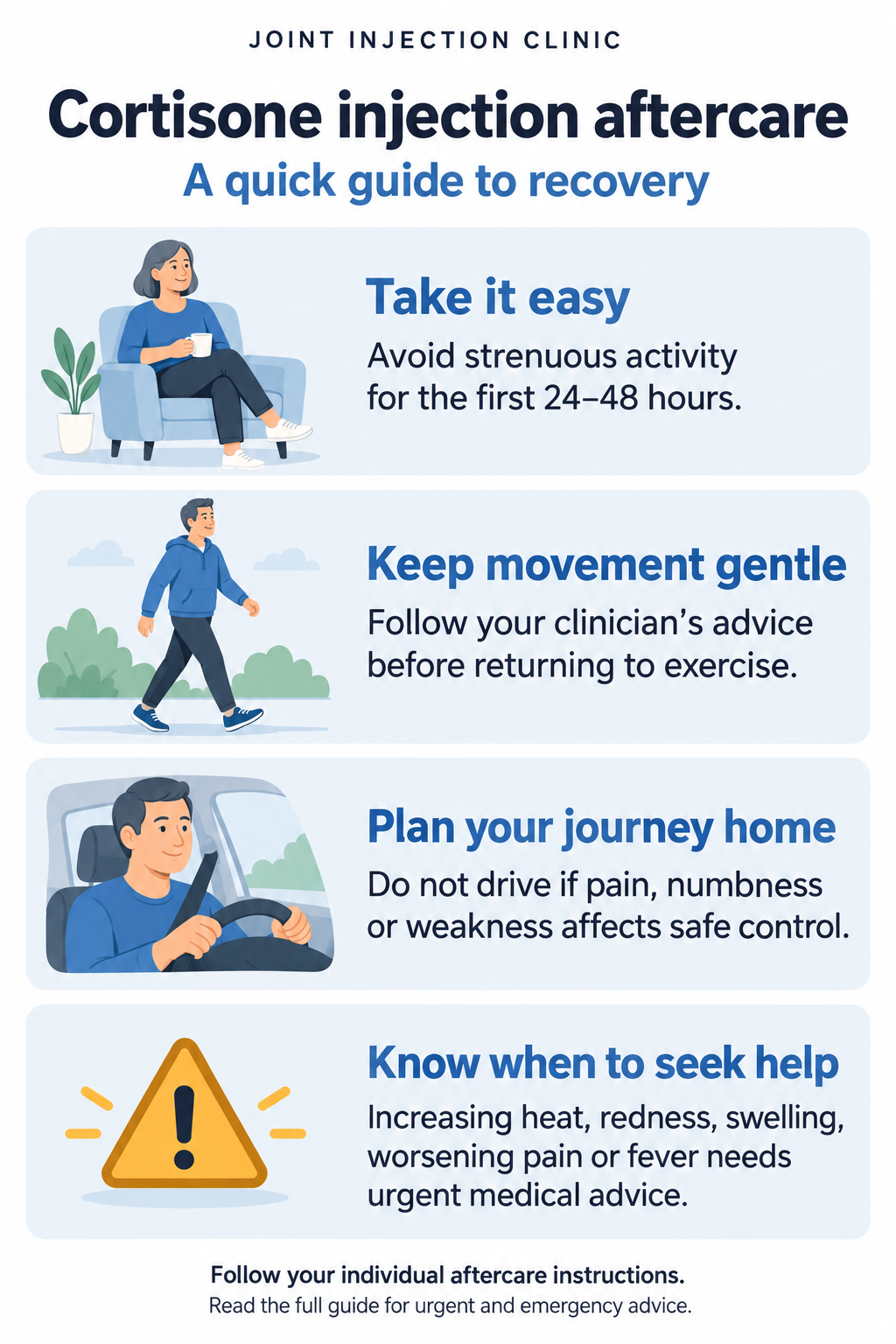
What should I do in the first 24–48 hours?
The most important thing is to take it easy for the first 24–48 hours.
This does not necessarily mean keeping the area completely still. Gentle movement is usually encouraged, provided it does not significantly increase your pain. However, avoid activities that place substantial stress on the injected area.
For example:
- Avoid heavy lifting after a shoulder injection.
- Avoid running, jumping or heavy gym exercises after a knee injection.
- Avoid repetitive or forceful use of a tendon that has been injected.
- Avoid activities that normally aggravate your symptoms.
Gentle everyday movement is generally preferable to complete immobilisation.
Many clinics, including NHS services, recommend resting the injected area for around 24–48 hours, followed by a gradual return to normal activity. Some soft-tissue or tendon injections may require longer restrictions depending on the tendon involved and the amount of loading required. Your clinician should give you specific advice for your particular injection.
A temporary increase in pain during the first day or two is also relatively common. This is sometimes called a steroid flare and usually settles within a few days.
After a joint injection – for example, the knee or shoulder
Following a joint injection, avoid strenuous activity for approximately 24–48 hours.
You can normally continue gentle movements of the joint, unless your clinician has given you different instructions. In fact, prolonged complete rest is generally unnecessary.
For example, after a knee injection you may walk gently around the house, but it would be sensible to postpone running, heavy gym exercises, squatting with heavy weights or other high-load activities for a short period.
After a shoulder injection, gentle shoulder movement can usually continue, but heavy lifting, overhead exercise and strenuous gym work should initially be avoided.
Once the initial rest period has passed, gradually return to your usual activities. If physiotherapy or exercises have been prescribed, your physiotherapist or clinician may advise you when and how to restart them.
After an injection around a tendon
Tendon injections require a little more caution.
Steroid can potentially affect tendon tissue strength, particularly when the steroid is injected directly into or immediately around a tendon. For this reason, heavy or repetitive loading of the treated tendon should be avoided initially.
The exact period of restriction depends on the tendon and the procedure. For example, advice may be more restrictive following an injection around a weight-bearing tendon than after some other soft-tissue injections.
Do not use the reduction in pain as a signal that the tendon is immediately ready for heavy exercise. The steroid may reduce pain before the underlying tissue has recovered.
Your clinician or physiotherapist should therefore provide a progressive rehabilitation programme where appropriate.
Should I keep the injection site covered?
Your clinician may place a small dressing or plaster over the injection site.
Keep the area clean and follow the instructions you were given about when to remove the dressing. Depending on the service and type of injection, you may be advised to leave it in place for several hours or until the following day.
Avoid unnecessarily touching or contaminating the injection site.
Can I take painkillers after a cortisone injection?
You can take pain relief if you need it and if it is safe for you to do so.
It is quite common for the injected area to remain sore for the first 24–48 hours. Simple pain relief such as paracetamol can be used if appropriate for you.
Some people may also be able to take an anti-inflammatory painkiller such as ibuprofen, but this is not suitable for everyone. You should check with a pharmacist, GP or clinician before taking an NSAID if you have conditions or take medicines that make these drugs unsuitable.
Painkillers do not prevent infection
Taking a painkiller does not prevent infection. Painkillers are taken to control discomfort following the injection; they do not protect the injection site from infection.
The risk of infection is kept very low primarily by appropriate infection-control measures during the procedure, including keeping the skin clean after the injection.
Therefore, you should not take painkillers simply because you are worried about infection. Take them because you have pain and because they are appropriate for you.
It is also important to remember that painkillers can sometimes make pain less noticeable. If you develop symptoms suggesting infection, do not simply continue taking painkillers and ignore the symptoms.
Post-injection pain and signs that need urgent assessment
Some pain and tenderness immediately after an injection are normal.
A steroid flare can cause increased pain, and sometimes redness or swelling, during the first day or two. This normally settles. Infection is very uncommon, but it is important to recognise the warning signs.
Seek urgent medical advice if the injected area becomes increasingly:
- Red
- Hot
- Swollen
- Painful, particularly if the pain is getting worse rather than better
You should also seek medical advice if you develop:
- Fever or chills
- Feeling generally unwell
- Increasing difficulty moving the affected joint
- Significant swelling
- Pain that continues to worsen after the initial period rather than gradually improving
An infection within a joint can be serious and requires prompt assessment.
Can I drive after a cortisone injection?
There is no single rule that applies to every injection. Whether you can drive depends on:
- Where the injection was given
- Whether local anaesthetic was used
- Whether the injected area is numb or weak
- Whether you are experiencing significant pain
- Whether you can safely control the vehicle and perform an emergency stop
Some NHS services allow patients to drive after an uncomplicated injection if they feel completely safe to do so. Other services advise patients not to drive immediately after the procedure and to arrange alternative transport.
If local anaesthetic has been used, the area may temporarily become numb. For example, an injection around the foot or ankle could temporarily affect your ability to operate the pedals safely. If you’re planning to fly or travel soon after treatment, read our guide to flying after a joint injection for further practical advice.
Planning your journey home
If you are unsure, arrange for somebody else to drive you home.
You should not drive if the injected area is numb, painful, weak or otherwise affects your ability to control the vehicle safely.
Always follow the specific instructions given by the clinician who performed your injection.
When will the cortisone injection start working?
The response varies considerably.
If local anaesthetic was included, you may initially experience rapid pain relief. This can wear off after a few hours.
The corticosteroid itself usually takes longer to have its anti-inflammatory effect. Some people notice improvement within a couple of days, while in others it can take several days or even one to two weeks to experience the full benefit.
Do not be concerned if you do not experience immediate improvement. Please get in touch with us if the injection has not worked after 3–4 weeks so that we can discuss alternative options. Seek advice sooner for worsening pain or any warning signs described in this guide.
What about exercise and going back to the gym?
This is one of the most important parts of aftercare.
Exercise after a joint injection
After a shoulder, knee or other joint injection:
First 24–48 hours:
- Rest from strenuous activity.
- Gentle movement is usually encouraged.
- Avoid heavy exercise or activities that significantly increase pain.
After 48 hours:
Gradually resume normal activities.
Increase exercise progressively rather than immediately returning to your previous training intensity. In most cases, light weights are allowed, with heavier weights reintroduced after 3–4 weeks in line with your clinician’s advice. Your individual restrictions take priority.
Exercise after a tendon or soft-tissue injection
Be more cautious with tendon-related injections.
Avoid immediately returning to heavy resistance training, repetitive loading, running or impact exercise involving the treated structure.
The appropriate rehabilitation period depends on the tendon and the underlying diagnosis. Your clinician or physiotherapist should advise you when progressive loading can safely begin.
What if my pain gets worse after the injection?
A temporary increase in pain is relatively common.
Try:
- Resting the area
- Avoiding activities that aggravate the pain
- Using an ice pack wrapped in a towel for short periods if this is comfortable
- Taking appropriate pain relief if required
If the pain is severe, continues to worsen, or is accompanied by increasing warmth, redness, swelling or fever, seek medical advice rather than assuming it is simply a steroid flare.
When to seek urgent medical attention?
Contact your GP, NHS 111 or the service that performed the injection if you are concerned about possible infection.
Seek urgent medical attention if you develop significant systemic symptoms such as feeling very unwell, fever or chills, or if the injected joint becomes increasingly hot, swollen and extremely painful.
A serious allergic reaction is very rare, but if you develop difficulty breathing, swelling of the lips, mouth, tongue or throat, or collapse, seek emergency medical attention immediately.
Cortisone injection aftercare: key reminders
After a cortisone injection:
- Rest the injected area for around 24–48 hours. Avoid strenuous exercise, heavy lifting and activities that aggravate your symptoms.
- Do not confuse rest with complete immobilisation. Gentle movement is usually appropriate unless your clinician has advised otherwise.
- Tendon injections may require longer or more specific activity restrictions. Avoid heavy loading of the treated tendon until you have been advised that it is appropriate.
- Painkillers can be used if required and if they are safe for you. Paracetamol is commonly used for post-injection discomfort. Anti-inflammatory medication such as ibuprofen is not suitable for everyone.
- Painkillers do NOT prevent infection. Infection prevention depends primarily on appropriate sterile injection technique and good aftercare.
- Some pain during the first 24–48 hours can be normal. A temporary steroid flare can occur.
- Increasing redness, warmth, swelling, worsening pain or fever is not something to ignore. Seek medical advice if these symptoms develop.
- Driving depends on the injection and how you feel. Do not drive if you have numbness, weakness, significant pain or anything that could impair your ability to control the vehicle safely. If local anaesthetic has been used, arranging alternative transport is often the safest option.
Most people recover from a corticosteroid injection without significant problems. The aim of the injection is not simply to remove pain, but to provide a window in which appropriate movement, rehabilitation and management of the underlying condition can take place.
Follow-up and support at Joint Injection Clinic
For routine questions about your recovery or to discuss follow-up care, contact Joint Injection Clinic. For urgent symptoms, follow the advice above rather than waiting for an email response.
Considering treatment? Read our guide to cortisone and steroid injections or explore our clinic locations.
References
- NHS: Side effects of hydrocortisone injections — pain, rest and symptoms requiring medical attention.
- NHS: How and when to have hydrocortisone injections — treatment and recovery information.
These NHS resources discuss hydrocortisone specifically. Follow the advice for the medicine and procedure used by your clinician.